
Zohran Mamdani Elected Mayor of New York - Why This Has Stirred Up Debates for the Regional Economy
.jpg)
Santiago Bel
November 12, 2025
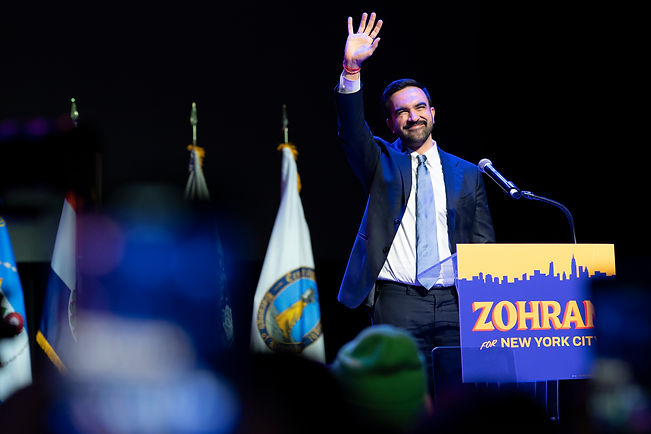
Living anywhere in New Jersey, especially close to New York City, hearing about what happens in one of the most populated cities in the United States isn’t uncommon, especially when the people of the boroughs elect someone unexpceted as mayor. Though the new NJ governor Mikie Sherril was elected on the same day on November 4th, more national attention has been drawn to the election of Democratic candidate Zohran Mamdani.
As a candidate, Mamdani was relatively inexperienced, expressing an ambitious and highly progressive agenda. He ran against Republican candidate Curtis Silwa, and incumbent Andrew Cuomo who ran as an independent.
What drew a lot of popularity to Mamdani were his progressive promises for the city, especially in his agenda to make NYC more affordable. Some of Mamdani's main campaign promises included making the city's buses free, freezing stabilized rents, providing universal child care, increasing the minimum wage by 2030 and lowering the cost of living by raising taxes by 2% on residents earning over $1 million per year.
While these projects would be extremely beneficial to many and would improve the city, there are some major obstacles making these promises unrealistic in many ways. For example, his idea of targeting just rent-stabilized units for rent, while making enforcing new tax policies more manageable. On the other hand, landlords still have expenses to pay–maintencance taxes, insurance, etc. If rents are frozen some landlords may put off repairs and other maintenance activities, leading to deteriorating housing quality. Mamdani’s plans could also lead to a decrease in housing supply, higher rent for people in market-rate apartments, which account for about 55% of NYC apartments, negatively impact small property owners, and potentially discourage new construction. Another example is the case with the free buses. The plan could work as it reduces transportation costs for low-income residents, could increase economic mobility as more people are able to get around easier, helping people access jobs and education better, and additionally plans like this have worked before on smaller scales, like in Kansas City, Missouri. But again, there are obstacles. High operating costs would require sustained funding from the city. Fare revenue helps maintain service and pay drivers; relying only on taxes may strain the city budget, reducing the quality of programs in other sectors apart from transportation, so the trade offs would need to be thoroughly evaluated. Additionally, a sudden increase in people using public transportation could stress infrastructure, and also be potentially dangerous.
Additionally, many of his plans, including the free public transportation one, require approval from the state government, and governor Kathy Hochul has already expressed opposition to some tax increases.
Zohran Mamdani’s plans illustrate a bright future for NYC, but the financial obstacles that need to be hurdled may likely make his time in office less successful than planned.
At the end of the day, the main controversy regarding Mamdani’s elections are his main political views. Mamdani has openly expressed himself as a socialist, and states that he has no regret in being one. Many times when people hear the term “socialist” they immediately disapprove because of the evidence in our world today and in history of economies built on socialism being economic failures and inefficient systems. While many of Mamdani’s plans are characterized by being socialist, they are not straight up communist. Sure, they might fail, some of them may work, but right now, the best thing to do is to examine trade offs, consider the financial implications of making changes, and determine at what points are changes going to help hundreds of people, and at what point are harmful economic decisions are being made.